6.11.2020

How Eve is Surviving the Pandemic: Dealing with Loss and Creating New Habits

How I am Surviving the Pandemic: Dealing with Loss and Creating New Habits

At the beginning of quarantine, I wondered how my life could maintain some sort of normalcy. On top of these worldwide changes, my beloved emotional support dog, Lucy had suddenly passed away. I was overwhelmed with anxiety and my life was out of balance. 

Grieving 

My first step in grieving the loss of Lucy and the overall loss of normalcy was to accept that these changes were completely out of my control. I realized that what I needed most was to create new and healthy habits for myself. “What do you need to unlearn?.. What new habits could you adopt in order to enjoy life more?” (p. 13) This quote from Puja Thomson’s “Track Your Truth” helped me to realize that my daily habits needed a revamping to suit my new lifestyle. 

Sleeping Schedule 

Instead of waking up at 7AM for my 8AM classes and going to bed at 11PM after late night dance team practices, I began waking up at 11AM and going to bed at 2AM. This new sleeping pattern was unhealthy as I lost several hours of my day every morning and felt an overall grogginess. “It takes awareness to find your true place of equilibrium.” (p. 63). After reading T Y T, I became more conscious of what my body had really been telling me, as I was ignoring the signals for so long. As I have returned my sleeping schedule to its pre-quarantine normalcy, I’ve noticed a significant energy boost throughout my days. 

Phone Addiction 
Sitting inside all day with seemingly nothing to do, I often find myself mindlessly scrolling through my phone for hours at a time, feeling sluggish and lazy. Several of my friends are engaging in the same unhealthy habit, as many people take little to no time away from their devices. “With conscious awareness, in any moment, you can make new choices and develop new patterns of behavior in line with your current values” (p. 107). This quote from T Y T brought awareness to my phone addiction. By taking mental notes of when I log on and log off my social media accounts, I’ve become mindful of how much time I take scrolling on my phone. 
Exercise 
I was always on the go; rushing to class, working out at the gym, free flowing at the dance studio, and taking frequent walks with Lucy. Lately, I’ve been taking constant trips to the refrigerator and pantry to seek antidote from wandering boredom and sadness. “Movement, both physical and spiritual, can create a much healthier you” (p. 92). When I read this, I realized that I needed to start taking better care of my body in order to create a healthier lifestyle so that I could feel good about myself. Recently, I’ve been doing gentle morning yoga to start my day with good intentions. This simple and easy change to my daily routine has allowed me to take some time away from my phone and calm my thoughts by connecting my mind and body. 
A Happier Me 
Now, I am more present in each moment and live with ease because I have created new habits. I now take the time to nurture my body and mind. “When you start to appreciate and respond to the blessings of body, mind, emotions and spirit, you can initiate a wider range of choices to create a healthier lifestyle” (p. 4). This book encouraged me to transform my life in a time of turmoil and unexpected unfortunate events. With similar changes and guidance from Puja, you can shift your life towards positivity and happiness as well. 

Written by Eve Benedetti, SUNY New Paltz Intern at Roots & Wings

4.03.2018

"TRACK YOUR TRUTH" SNEAK PREVIEW OF STEP THREE: TAP INTO ENERGY PRINCIPLES


We can all use energy principles to change how we are feeling and how we think and act. We are energy beings, not just physical beings and we have internal senses that can guide us. Paying attention to them, you will also become more familiar with your emotional, mental, and spiritual self. An example of how you can use your internal energies is if you listen to the little voice inside your head; this voice is your self-talk. By tuning in to self-talk that is positive and healthy, you can encourage yourself with whatever task or goal that you are trying to accomplish. Sometimes, self-talk can even entertain you, especially when you use your imagination! If you allow yourself to have negative self-talk though, you leave yourself open to discouragement, gloomy, or even harmful thoughts about yourself. While it can be difficult to talk your way out of these dark places, it can be done because you have the power to change how you feel and what you tell yourself!

In my own life I have to remind myself that I have the ability to change the direction of my thoughts and feelings to more optimistic ones. For example, when I have to give an oral presentation, I get anxious and my self-talk becomes negative; I tell myself I will probably stumble over my words, stutter, or say something incorrect. So, instead, I tell the voice in my head to think positively and confidently. I say things such as, what I am presenting to the class is helpful and informative and that I have worked hard and know what I’m talking about. This not only changes my mood but it also improves how I feel physically. When nervous, I tend to breathe heavily and my voice shakes, but as I talk encouragingly to myself, my breathing calms down and I become steadier. In Track Your Truth, Puja writes: “Just a little bit of self-confidence can make a huge difference and can help you seize opportunities in front of you…The really good news is that we can develop inner strengths such as resilience, confidence, and insight by actively decreasing our focus on the negative and increasing our focus on the positive.” Simply by transforming your thoughts, you can improve your entire outlook on who you are and how you want to feel.


With skills like changing the way you speak to your inner self, you can improve your understanding of your internal senses and energies. When this happens, you can develop a greater sense of how interdependent your thoughts, feelings, spirit, and body are.

Written by Allyson Macci, Roots & Wings SUNY New Paltz Intern

3.12.2018

"TRACK YOUR TRUTH" SNEAK PREVIEW OF STEP TWO: FOCUS ON YOUR "HEAD, HEART, HAND, & HUNCH"

Step Two of Puja’s upcoming book, Track Your Truth, discusses the inter-relationship of mind (head), body (hand), emotions (heart), and spirit (spirit). I really love this powerful quote: “When the physical body provides clues about emotions through heart-felt feelings and gut reactions, pay attention because these clues are part of the miraculous way you are guided to truth, happiness, and well-being.”

The body is incredible and what we often overlook is how each memory it stores has a feeling, both emotional and physical, to accompany it. With this in mind, it is important to remember that your emotions can influence your physical state of being. The way you feel emotionally can cause your body to react in a physical way. For example, sometimes my stomach feels queasy but this does not always mean I’ve eaten something bad or have a cold. Instead, this physical sensation can be connected with an emotion like anxiety or nervousness.

I also think it is important to acknowledge what Puja writes: “Since everything that has happened to you is stored in your body, memories of all the events in your life including your feelings may be hidden from your consciousness, but they are not lost. They may resurface later.” Every feeling, intuition, or hunch you experience is important, no matter how small you think it is. If you ignore or repress these clues, both physical and intangible, this could have negative effects. All aspects of yourself are valid, and the sooner you acknowledge and listen to them, the easier it will be to live your truth.

Written by Allyson Macci, SUNY New Paltz Roots & Wings Intern

3.05.2018

"TRACK YOUR TRUTH" SNEAK PREVIEW OF STEP ONE: START WITH YOUR MIRACULOUS BODY

Paying attention to what is happening in your body will help you track and live your truth. When you focus on what your body is telling you, you will pick up on its signals sooner. By quickly responding to a pain or an off-feeling, you not only take care of your physical being, but your mental and emotional self as well. Connecting to your body and acknowledging the signs it presents to you can also help you when you interact with others. For example, your gut feelings will tell you who to trust and who to be wary of. Instead of relying heavily on others to tell you how you are feeling or how to feel, knowledge of your body will lead you to make your own authentic decisions.


I find it is easy to become preoccupied with what I am involved in that I forget to take care of not only my mind, but my body. As a busy, and often overwhelmed student, all too often do I ignore the signs my body makes when it needs some tender love and care. It can be difficult to drag myself away from an assignment, and sometimes it gets to the point where I can feel my eyes drooping while reading or hear my stomach growling. When these things happen, I know it is time for a break so I will go for a walk or have a snack like an apple. My body is my home, a vessel that will be with me for a very long time and needs the attention it deserves in order to flourish.

One aspect in Puja’s new book, Track Your Truth, that stands out to me is when she writes: “If you’re not connected to yourself, someone with a strong negative influence is more likely to take advantage of you. In an unbalanced state, you may be influenced by the persuasive demands, needs, or wishes of others who do not have your best interests at heart, and thus lead you to make decisions you may regret later. It is not safe to pay more attention to others than to yourself.” I think this last sentence is very significant; it really resonated with me and is something that readers, and I myself, must remember.

Written by Allyson Macci, Roots & Wings SUNY New Paltz Intern

2.20.2018

Sneak Peak of TRACK YOUR TRUTH: Discover Your Authentic Self


In Puja A.J. Thomson’s upcoming book, Track Your Truth: Discover Your Authentic Self, she guides the way to you leading your best, most meaningful life. Throughout her writing, she explores the ways in which you can be a detective of what works and what doesn’t in your life, and how this can affect the way you live. Puja helps you to learn how to welcome change and create healthy habits, all of which will aide you in learning how to live your truth. Her book is broken down into four helpful steps -- Step One: Start with Your Miraculous Body, Step Two: Focus on Your “Head, Heart, Hand, & Hunch,” Step Three: Tap into Energy Principles, and Step Four: Welcome Change, Live Your Truth. Within each Step there are chapters that outline different aspects that will bring you closer to truly understanding and connecting with your mind, body, emotions, and spirit. These Steps will teach you how to focus your own energy, and in the end, show you how important it is to listen and acknowledge your true self.

I had the privilege of getting a sneak peak at Track Your Truth. I will discuss the parts that stood out and resonated with me the most in four blogs, each dedicated to one of the four different Steps.

In the meantime, have a look at the Coming Soon! section under the “Store” tab on the Roots & Wings website, to see Advanced Reviews for Track Your Truth.

Stay tuned -- next week, I will post the first blog about Step One: Start with Your Miraculous Body!


Written by Allyson Macci, Roots & Wings SUNY New Paltz Intern

5.22.2017

My Hope & Focus Cancer Organizer: Planning for Survivorship
          Thomson_Cancer_frontcoverlarge.jpg
                My aunt recently successfully finished her breast cancer treatment and we couldn’t possibly be happier. She is now a survivor. Getting a cancer diagnosis is terrifying. It completely changes your life. However, hearing the news that you are cancer free is something that is also life changing. You beat one of the hardest experiences life has to offer. You would think that the journey ends there but there is still more to be done. In Puja Thomson’s “My Hope & Focus Cancer Organizer”, there is a section specifically about survivorship when treatment ends. In this section, Puja talks about how this new stage in a cancer survivor’s life can be scary. She lists out ways that your healthcare providers and doctors should help you during this time. I showed this part of the book to my aunt and interviewed her.
“I was so relieved that all of it was over,” my aunt told me. She was so nervous during her treatment that getting the news that her cancer was gone was something that she really needed to hear. However, she couldn’t erase all of her fears. Going through something like that is life altering and it is hard to go back to the way things were before the diagnosis. “I remember sitting there with my doctor and thinking…okay, now what? A part of me just wanted to get along with my life but I also wanted to make sure that everything was in order.”
After talking to her about how she was feeling, I showed her Puja Thomson’s cancer work book/ organizer. She looked through it and I could see her nodding along to the things she agreed with. “I can tell that she knows what she’s talking about,” she said after reading it. My aunt agreed that she did feel vulnerable now that she wasn’t able to see her doctors on a regular basis. She confirmed that her doctors have reviewed her past treatment with her and told her what she could do for an after-care survivorship plan. “I was lucky enough to have really nice providers during this time. They were extremely caring and made sure that I was feeling comfortable with everything.” Cancer physicians are now required to provide a post treatment care plan to discuss with you. This is something I had no idea about and I was curious if she knew that this was something she should have expected.
“I didn’t know this was something they had to do,” she admitted. “But I’m so grateful that they did. I would be so lost without them.” Puja lets her readers know that the survivorship plan is something that is extremely important and that it “will provide recommendations for your future care to guide your progress both to prevent a recurrence and to support you towards where you want to go to maintain good health.” This new section of the workbook is very informative and helps those who have never gone through cancer before and are coming to an end of their treatment.
“This book is really helpful. I didn’t know anything about aftercare and I could imagine that other people are probably in the same boat…I would definitely check out her other books.” After going through cancer, you deserve to feel at ease. This workbook will put you on track of achieving this.
               

 Written by Heather Salerno, SUNY New Paltz Intern 

5.05.2017

Roots & Wings for strength and freedom
          Product Details
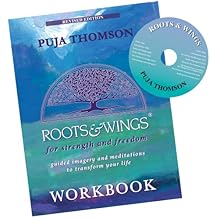
                Puja Thomson’s products all focus on ways to better your life. Whether it be through organization or through finding inner peace, she writes with the intent of helping others. In her CD, or downloadable track, and companion workbook “Roots & Wings for strength and freedom”, one section involves how we are all connected. To get an even more immersed in this process, listen to the CD first. The CD guides that book and is a must have if one wants the full experience.

                It is hard to not see bad news all around us recently. Wars and hate is running rampant as we go through our everyday lives. People are suffering and it seems like it might not end anytime soon. After all, as Puja reminds us “We are all children of Mother Earth, each a cell of the planet, affecting the health of the whole”. Even though we come from different areas with different languages, cultures, and religions, we are all part of the human race. We are in this together and when we accept ourselves we’ll be more able to accept others despite their differences.

                You might ask how one could do that. Sometimes, it seems hard due to how different we can be. Puja has pointed out that if you are happy with yourself, you are more likely able to accept others. “As you become more grounded, receiving nourishment from the best of your roots, you will develop the confidence and strength to fly in accordance with your own gifts and vision”. Once you realize your own gifts you can offer to the world, you’ll be able to do many things.

                Her companion workbook gives you plenty of space to think and consider what exactly you’re thankful for in life and how important it is to understand all the changes in your life. With her prompts and questions, you’ll have the opportunity to be able to think about these important issues in life and to make sense of them. This CD is designed to “support you in the inner work of transforming your life - so that you may carry forward the best of your roots, and fly according to your own truest vision.” This CD has Puja Thomson guiding you through the book and has Richard Shulman's music. This music can create a vibration that helps us calm our fears and find peace of mind by focusing what we wish for ourselves.


                This book has so much to offer. From figuring out your own self and your connection to the world to remembering things such as family and places, you’ll feel extremely enlightened by the end of it. It can help get your mind in order and with a peaceful mind comes a peaceful life. 

Written by Heather Salerno, SUNY New Paltz intern at Roots & Wings
Meditation Blog
Free stock photo of person, woman, relaxation, relaxing

There may be times when the stress may seem like too much. You may not know what to do to make that strong feeling any less intense. However, there are many ways to calm your mind. Different forms of meditation can help overcome stressful situations. The one that I use on an almost daily basis is a breathing meditation.

This is a relatively simple form of meditation. To begin, find a quiet place where you won’t be distracted. This could be your room or your garden or anywhere you find peaceful. Then, find a comfortable and relaxed way to sit because you don’t want any body pains to take away from this experience. The goal is to only focus on the present. close your eyes to make sure that nothing will distract you.  If your mind wanders, sit there and concentrate on breathing. Keep track of how you breathe and how your body moves while you breathe. It does not need to take too long. You could start by setting aside a few minutes out of your day to do this. Once you start, you will find that your stress levels have decreased.

Here’s an example of how I have used this technique. Living with five other people can add stress to any person, no matter how much you like your housemates. I’m a full time student and after hours of classes and homework, I’m already feeling a bit on edge. Coming home to even the simplest of inconveniences can set me off on some days. Recently, I had a very stressful day of school. I came home to a sink full of dishes even though we have a rule about cleaning dishes right away. After seeing this, I wanted to just scream. However, I know this wouldn’t solve anything. I went to my room and sat down on my bed. I closed my eyes and just concentrated on my own breathing. It took a few minutes but I did feel the stress leave my body. After this, I was able to calmly ask my housemates to clean up. When we’re in a bad mood, we can lash out at the people around us. This is something I want to avoid because having loved ones around me is extremely important.

               There are many different types of meditation. I haven’t had much experience with more advanced meditations but I’m able to enjoy the benefits of simpler ones. Thanks to the internet, it is relatively simple to find one that is right for you. The advantage of meditation, such as understanding your body, relaxation, and enlightenment can help anyone in their day to day life. 

Written by Heather Salerno, SUNY New Paltz intern at Roots & Wings

4.18.2017


Black and White Organizer Besides Red Click Pen
                                           Follow Up Interview With Diane
Recently, I followed up my first interview with my friend Diane about her depression and anxiety which she had coped with for most of her life through medications and holistic healing. She managed to find ways to help keep all her emotions in check and was able to live a healthy life. At the end of that interview, I gave her advice from Puja Thomson’s book “After Shock”. She took this advice and decided to go even farther with it.
I discovered that Diane started to journal her life on a regular basis. “At first it was hard to get into the groove of it,” she explained to me. She had never really kept a journal before and the task seemed a little daunting at first. Her life can get busy with school work and maintaining a social life.  “I had to find some time in my day to just sit down and get writing…once I started it, I started to really enjoy it.” She started off with just doing it a few times a week but soon she found herself doing it almost every day. “Some days I would write pages about how my day went and other days I would just write a few sentences…but I really did start to see a difference with myself”.
“I would usually do my journaling before I went to sleep. It was just a good time to get everything I was feeling off of my chest”, she told me. She started to realize that she would be able to sleep easier when she did this. “When I had a bad day, it was good to just get it all out…by the end of journaling, I felt good enough to just to let go into sleep.” Since sleep also helps with reducing stress, Diane was feeling more refreshed as the days passed.
Life is bound to come with stress. From illnesses, to work, to fights with loved ones, stress is unavoidable. Being able to reduce this stress is something that everyone deserves. “Getting my feelings on paper was so therapeutic”, Diane said. “Some of the things I feel most people wouldn’t understand. Most people don’t get the feelings that come with anxiety and depression”. No one has to read her journal. She doesn’t have to filter what she has to say and worry about how anyone would react to it. “I’ve always been afraid about disappointing or upsetting the people I’m around…having this journal helps take that struggle off of my shoulders”.  

At the end of the interview, I lent my own copy of “After Shock” to Diane. She skimmed it and seemed interested. “I’ve never gone through cancer or any type of illness like that…but I can see how you could apply her suggestions to other things.” Not only would I recommend Puja Thomson’s books to others, so would Diane. Leading a healthy life is something we all should strive for, but sometimes it’s hard to start. Getting suggestions from this book is a good way to begin this journey. To see more of this book, you can find the revised version of “After Shock: From Cancer Diagnosis to Healing” on Amazon.   
Written by Heather Salerno, SUNY New Paltz intern for Roots & Wings

4.10.2017

                                 How Suggestions From “After Shock” Changed my Daily Life
Free stock photo of notebook, writing, pencil, start
Recently, I’ve felt like I definitely need more organization in my life. With graduation coming up, the stress of finding jobs, moving back home, and saying goodbye to this stage of my life has left me in a state of disorganization. I used to take pride in being neat and orderly so, I want to get this back in my life. I’ve never had cancer, but Puja Thomson’s Book “After Shock” comes with plenty of tips to keep oneself organized through stressful situations. It also promotes different ways to help de-stress oneself through various activities. “Unnecessary distractions from disorganized record keeping will dissipate and drain your energy-the very energy you need for healing” I took tips from her book and did see a change by the end of the week.
Puja’s book does focus on how to keep one’s medical papers organized, but I decided that I could use her advice for my own personal needs. I started off with just getting my school work in a more organized place. I bought different binders for each class and it did keep everything in one place. I threw out all old papers that I didn’t need, which was a little hard for me since I’m a slight hoarder. However, once all the clutter was gone, I could already tell that I would be able to find all my important papers much easier.
The Yellow Page step, which suggests writing down contact information of your “most important cancer –related contacts and frequently used resources”, I just wrote down the names and numbers of all the people I am in regular contact with. I’m not good with memorizing numbers so, this should be a huge help if my phone ever breaks and I need to get in contact with someone. I would recommend that everyone should do this and keep this sheet of paper with them at all times. It’s always good to have in an emergency.
                I also decided that I should take the advice (from a different section in this book) to write down any major events that happened in my day or just write down my feelings. According to “After Shock”, “when you take time to write to yourself with honesty and innocence from your heart, you are extending a similar gesture of openness and love towards yourself”. From a person who is not good with expressing emotions, I saw a huge improvement when it came to my stress levels. Keeping everything bottled in doesn’t help anyone and being able to just write down how I was feeling that day made life easier. “After Shock” recommended to keep this journal private and that’s exactly what I did. It’s liberating to be able to express yourself without anyone else judging you.
Reading how relaxing can help the mind and body, I tried to follow everything this book suggested. I’ve always had a hard time sleeping and actually staying asleep. Before I go to sleep now, I try and do the breathing exercises. Just concentrating on that does put me more at ease and I’ve noticed that I can fall asleep a lot faster. I’ve also started to release physical tension. I’ve never realized how tense I am before. Just giving myself a quick massage makes me feel less stressed and more relaxed.

                By the end of the week, I realized how more relaxed I felt. Since I knew where all my important notes were, I was able to study more efficiently. I also was able to concentrate longer because I wasn’t so tired. Puja’s books are meant to help with the health of the reader. I would recommend that anyone that needs a way to get their life in order to read her books. 

Written by Heather Salerno, SUNY New Paltz Intern for Roots & Wings 

3.13.2017

How Modern Science and Holistic Healing are Working Together
black-and-white, outdoors, person

                My name is Heather Salerno and I am an intern from SUNY, New Paltz, interning at Roots & Wings. This is giving me insights into more forms of natural healing. I started to think of how people could combine both natural and scientific medicines. I interviewed my friend, Diane*, who has both anxiety and depression to see if mixing both forms of healing could be helpful. She is in her twenties and is a college student.

                There are many challenges one faces when dealing with a disease. Whether it be physical or mental, the strain it causes on a person can be damaging. Luckily, with the advanced science that is available, medications are out there that can help with these diseases. However, there is also natural forms of healing that can also benefit those who are in need.

                Diane was given medications to help her deal with the symptoms but came to realize that a holistic approach could also benefit her. She was diagnosed when she was in middle school but she knew she had it for longer than that. “I had trouble getting motivated and was constantly anxious,” she told me.  “People don’t realize how this can seriously drive a person crazy…I don’t have the motivation to get out of bed but then I feel anxious knowing that I should be out doing things.” It was hard for her to find balance in her life. However, after she was diagnosed, people started to understand her better. “…people, like my family, started to understand why I acted the way I did,” she explained. They realized Diane wasn’t just being ‘lazy’ but had a legitimate disease that held her back from doing things.

As time went on, Diane came to realize that certain things helped her to overcome these challenges. She pointed out that the medication she’s on does help but she does other things to get her through the day. “I usually try to just get outside as much as I can. Just getting some sunlight helps,” she explained. Diane also came to realize that yoga and meditation could also calm her down when she was feeling stressed. She never had any real formal teaching when it came to yoga but just going through the motions helped her body release stress and clear her mind. She does a form of meditation that involves full focus on her breathing. “I go into my room and make sure everything is quiet,” she said.  “I sit on my bed and close my eyes and just listen to myself breathe…It was kind of hard at first because my mind would start to wander. After a while, I got kind of good at it. It just helps me relax and concentrate on the present”. Doing this also enables her to regulate her emotions. This also helps her avoid trying to escape her room and she can now be comfortable being alone with herself.

Diane believes that these things help her just as much as her medications. Without the yoga or the meditation, she would have a harder time to keep her emotions balanced. As long as she keeps moving throughout the day, she tends to feel much better. Even just social interactions will put her in a better mood.

At the end of this interview, I brought up a self-care example from “After Shock: From Cancer Diagnosis to Healing”, that of keeping a personal journal which can be suitable for anyone. This   involves writing down one’s thoughts, feelings, and events that happen throughout the day. In doing so, one has the time to reflect on one’s experience. Diane admitted to never keeping a journal before but decided that she would try it out. “It’s always great to see what I did throughout the day,” she said, “and I can see how writing down my thoughts and feelings could be therapeutic.”

* For confidentiality, Diane is a pseudonym.

6.24.2015

Root Chakra: The Body's Foundation


Located at the base of the spine, the Root Chakra connects us with our natural surroundings, including our own bodies. A balanced first chakra can make us peaceful and at ease, as well as stable with life. The Root Chakra helps us satisfy our immediate needs.

Since it is the body’s foundation for the rest of the chakras, it is important to make sure the Root Chakra is properly balanced before focusing on the other chakras.

There are many ways to balance the Root Chakra, for example, affirmations work well. These are supportive sentences that encourage a positive outlook on life and can be specific to each chakra.

An affirmation for the Root Chakra is, “I nurture my body with healthy food, clean water, exercise, relaxation, and connection with nature.” You can see the simple power of the sentence if you repeat it to yourself, believing in its message.

Methods such as yoga, meditation, and exercise can also be used to balance the Root Chakra. As you let go of your worries and engage in these activities, you will be more peaceful and are more likely to feel good about yourself and your body.

Color also plays a big role for all of the chakras. For the Root Chakra, the color is red. It is the color of life, strength, fire, and harmony. Red is a color that catches the eye and can give you the passion, fire, and drive needed to push on with the betterment of your life, replacing your limitations with a clearer focus on what is really important.

Thus, the Root Chakra serves as the foundation for the body and for the rest of the chakras.


Prepared by Joseph Nikic, SUNY New Paltz Summer Intern for Roots & Wings

6.11.2015

Know Your Chakras

The earliest discussion of the chakras, or energy centers, in the body was found in the Vedas, a Hindu large body of texts originating in ancient India (1700 BCE- 1100 BCE).  ‘Chakra’ comes from the Sanskrit, meaning ‘wheels of light.' Our energy levels affect our everyday lives. Lack of energy, or blocked energy, can lead to stress, the feeling of illness, and actual illness.  Being in touch with your 7 key chakras or energy centers is important to keep positive energy flowing through your body, and to maintain and improve one’s health.

1.     The Root Chakra- Located at the base of the spine, the first chakra represents our foundation and connection with our bodies, the surrounding environment, and the Earth. It is the chakra that initiates our fight or flight response.

2.     The Sacral Chakra- The second chakra is more focused on pleasure and enjoyment. It is located 2 inches below the navel in the lower abdomen. It is considered the center for feeling and emotion.

3.     Solar Plexus Chakra- The third chakra is all about the individual. Located in the upper abdomen in the stomach area, the Solar Plexus Chakra is the center of our personality, identity, and ego. It effects our ability to be confident and in control of our lives.

4.     Heart Chakra- Located in the center of the chest, right above the heart, the Heart Chakra deals with our ability to love. This chakra deals with the love one has for other people, but also with the love of oneself as well as one’s inner peace.

5.     Throat Chakra- The fifth chakra deals with one’s voice and communication. The Throat Chakra is not just focused on speaking to others, but also on self-expression and genuine expression of one’s truth. Accepting our uniqueness  and what is true can help remove troublesome doubt and negativity from our lives. It is located in the throat.

6.     Third Eye Chakra- Also called the “Brow Chakra”, the sixth chakra allows us to see more than what is in front of us physically. It calls to our imagination and inner vision to help us focus on what matters most to us. Located on the forehead, right above the nose, the Third Eye Chakra allows us to see the deeper meanings of life’s experiences.

7.     The Crown Chakra- Located at the top of the head, the seventh chakra is at the top of the chakra chain. It represents our ability to be fully connected spiritually. It helps us realize that everything is connected spiritually at a selfless level. We develop an understanding of both inner and outer beauty as well as a pure connection with our own spirituality.

Although very basic, this list of the 7 chakras can help you ultimately come to peace  with all the aspects in your own life. This peace will create positive energies flowing throughout the body with fewer energy blocks, allowing you to feel better physically, mentally, spiritually and emotionally. There are many other minor chakras that affect our bodies, but these are the main 7 that connect us with ourselves, the world around us, and other people.


6.05.2015

Rejuvenation Break: Getting A Good Nights Rest

Getting enough sound sleep has a profound impact on your stress levels, immune function and disease resistance. Lack of sleep can leave you feeling sluggish, irritable, forgetful, accident-prone, and will cause you to have difficulty concentrating or coping with life's daily aggravations. 

Long-term sleep loss can also result in heart disease, stroke, hypertension, depression, and anxiety. While asleep, your body and immune system do most of its repairs and rejuvenation. A good nights rest is essential to making sure your days are as productive energy filled as possible.

Here are some tips that may help you get a better nights sleep:
  • Turn off all monitors that may distract you from relaxation at least one hour prior to getting ready for bed
  • Recall winding down techniques you practiced as a child to help settle yourself in for sleep. Read a book, brush your teeth, etc.
  • Avoid eating junk foods too close to bed time. It takes a lot of energy to break these foods down and may disrupt your ability to fall asleep
  • Try to get into a sleep schedule that allows you to maximize the hours you're asleep that will you leave you the most refreshed in the morning 
  • Incorporate exercise into your morning routine so you begin the day with more energy. It also makes you more prepared for sleep as you are more exhausted at the end of the day
Written by Altimont Parker, SUNY New Paltz Intern for Roots & Wings


12.10.2014

Organization Through An Intern's Eyes

Recently I had the pleasure to attend Puja's organization workshop and I had an interesting experience. I'm a senior and at 22 years old, most people my age aren't as concerned about their health as they should be. I had not a clue all of the steps necessary to effectively manage your medical paperwork before attending this workshop.

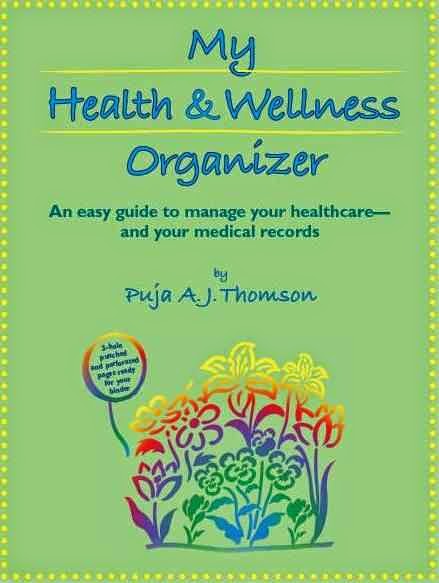
Puja went through her Health and Wellness organizer workbook which thoroughly outlines the steps necessary to manage documents and handle doctors appointments. I'm just now beginning the time of my life where I have to keep account of these things if I want to be on top of my health for years to come. Puja highlights six categories designed to help better organize yourself.


The yellow pages section discusses how to effectively organize your emergency and medical contacts. Including directory style contact list and steps outlining how to use it, this can be a time saver.

The next section informs you how to make medical decisions including how to reach out to those you'd like to include in your support system. I thought this section made it easier for you to access information you may need but may slip your mind when faced with medical emergencies. 

The third part in the organizer focuses on teaching you how to access your medical appointments. Visiting the doctor can sometimes be overwhelming and you may not always be ready to ask the appropriate questions. This section focuses on having a plan before you go into your appointment. 

Puja outlines the best methods to be used when following up with your doctor after your appointments. I didn't know this was an important step and the organizer sheds light on how that process can be effective. 

Steps on how to effectively organize bills, insurance and medical records. Puja outlines the best way to manage these materials and how to store them. I found that it was much easier than I would think and would help with later confusion.

And lastly "my reference library" focuses on how to organize research and materials needed that you may need for future reference.

The Health & Wellness organizer is perfect for someone like myself who is not experienced with organizing but values the importance of having important documents placed away efficiently. Having this information and workbook gives me a head start making me more confident on doctors visit. 

If you would like to order to Health & Wellness organizer for you or someone you love, you can visit the Roots & Wings website here: http://www.rootsnwings.com/products.html  

Written by Altimont Parker, SUNY New Paltz Intern for Roots & Wings